
A few years ago, the name Xiaomi meant one thing: affordable smartphones with strong specs. Today, the same company sells some of the most talked-about electric cars in the world. The Xiaomi SU7 and YU7 have turned a phone maker into a serious car brand in less than three years, and the story of how it happened is one of the biggest tech trends of 2026.
In this guide, we explain how Xiaomi moved from phones to cars, what makes the SU7 sedan and YU7 SUV different, how much they cost, how well they are selling, and what problems the brand still has to solve.
Key Takeaways
- Xiaomi announced its electric car plan in 2021 and committed about $10 billion over ten years.
- The Xiaomi SU7 sedan launched in March 2024 at a starting price of 215,900 yuan (about $30,000).
- The Xiaomi YU7 SUV launched in June 2025 and became a direct rival to the Tesla Model Y.
- Xiaomi delivered more than 411,000 cars in 2025 and passed 800,000 total deliveries in September 2026.
- The 2026 delivery target is 550,000 cars, and Xiaomi plans to enter Europe in 2027.
- The secret weapon is HyperOS, which links the car with Xiaomi phones, tablets and smart home devices.
From Smartphones to Electric Cars: The Xiaomi Timeline
Xiaomi did not build a car overnight. The move was planned for years, and each step was announced with big public events led by founder Lei Jun.
| Year | Milestone |
|---|---|
| 2021 | Xiaomi announces its EV business and plans to invest around $10 billion over a decade. |
| March 2024 | The first car, the Xiaomi SU7 sedan, goes on sale in China. |
| 2024 | The SU7 sells more than 136,000 units in its first year. |
| February 2025 | The Xiaomi SU7 Ultra performance sedan goes on sale. |
| June 2025 | The Xiaomi YU7 electric SUV launches and receives huge pre-orders. |
| 2025 | Xiaomi delivers over 411,000 cars for the full year. |
| March 2026 | The new-generation SU7 arrives with longer range and upgrades. |
| May 2026 | The YU7 GT and a cheaper YU7 Standard Edition are launched. |
| September 2026 | Total deliveries pass 800,000, and the SkyNomad series launches. |
| 2027 (planned) | Xiaomi plans to start selling cars in Europe. |
Why Did a Phone Company Start Making Cars?
There are three simple reasons behind Xiaomi’s move into electric vehicles.
1. The smartphone market is slowing down
Phone sales around the world have become flat. Most people already own a smartphone and upgrade less often. To keep growing, Xiaomi needed a new and much bigger product category. A car sells for many times the price of a phone, so even a small share of the car market brings in large revenue.
2. Modern EVs are computers on wheels
An electric car today depends heavily on chips, screens, software, batteries and apps. These are exactly the areas where Xiaomi already has years of experience. Building a smart cockpit is not very different from building a smart device, and Xiaomi already knew how to design user-friendly software.
3. A huge, loyal user base
Xiaomi has hundreds of millions of active users and more than a billion connected smart devices. These users already trust the brand. When Xiaomi launched a car, it was not starting from zero. Its fans were ready to buy, share and promote it.
Xiaomi SU7: The Car That Changed the Game
The Xiaomi SU7 is a four-door electric sports sedan. When it launched in March 2024, it shocked the car industry. Within days, it sold out the planned production for the year, and it reached its first 100,000 deliveries in just 229 days.
Xiaomi SU7 price and versions
At launch, the SU7 came in three main versions:
- SU7 Standard: 215,900 yuan (about $30,000)
- SU7 Pro: 245,900 yuan (about $34,000)
- SU7 Max: 299,900 yuan (about $41,500)
The base model was priced about $4,000 lower than the Tesla Model 3 in China, while offering more screens and a more premium cabin.
Xiaomi SU7 range and performance
The SU7 uses an 800-volt platform, Xiaomi’s own electric motors, and batteries from CATL or BYD. The dual-motor SU7 Max produces around 680 horsepower. The new-generation SU7 launched in March 2026 pushes range even further, with the Pro version rated at up to 902 km on China’s CLTC test cycle.
Note: CLTC range figures are tested in China and are usually higher than real-world highway range.
Xiaomi SU7 Ultra: the performance flagship
The Xiaomi SU7 Ultra is the brand’s halo car. It uses three motors and produces more than 1,500 horsepower. It went on sale in February 2025 at 529,900 yuan, a price far below European hypercars with similar power. The SU7 Ultra also set a lap record at Germany’s famous Nürburgring Nordschleife as the fastest four-door production car, which gave Xiaomi serious credibility among car enthusiasts.
Xiaomi YU7: The SUV That Took On Tesla
If the SU7 proved Xiaomi could build a good car, the Xiaomi YU7 proved it could compete in the most popular segment: the family SUV.
Xiaomi YU7 price and orders
The YU7 went on sale in June 2025 with three versions:
- YU7 Standard: 253,500 yuan
- YU7 Pro: 279,900 yuan
- YU7 Max: 329,900 yuan
The response was huge. The YU7 collected around 200,000 orders within minutes of opening sales and more than 240,000 orders within 18 hours. In its first ten months, Xiaomi delivered about 232,000 YU7 SUVs.
Xiaomi YU7 range and charging
The YU7 offers a CLTC range of up to 835 km in its longest-range version. It also supports very fast charging, with Xiaomi claiming 10% to 80% in about 12 minutes on compatible chargers. These numbers put it ahead of the Tesla Model Y on paper.
New YU7 Standard Edition (2026)
In May 2026, Lei Jun admitted on stage that the YU7 was not cheap enough compared to the Model Y. Xiaomi then launched a new YU7 Standard Edition starting at 233,500 yuan (about $34,300) with 643 km of CLTC range. This was a clear move to win more price-sensitive buyers.
Xiaomi YU7 GT: the fastest SUV at the Nürburgring
At the same event, Xiaomi revealed the Xiaomi YU7 GT, a high-performance SUV built for long-distance driving at high speed. Key specs include:
- Starting price of 389,900 yuan (about $57,300)
- Around 990 horsepower from two motors
- 0–100 km/h in 2.92 seconds
- Top speed of 300 km/h
- 101.7 kWh battery on an 897-volt platform
- CLTC range of 705 km
- Nürburgring lap time of 7:22.755, a record for a production SUV
Xiaomi SU7 vs YU7: Quick Comparison
| Feature | Xiaomi SU7 | Xiaomi YU7 |
|---|---|---|
| Body type | 4-door sports sedan | Mid-size SUV |
| Launch | March 2024 | June 2025 |
| Starting price (China) | About 215,900 yuan at launch | 233,500 yuan (2026 Standard Edition) |
| Maximum CLTC range | Up to 902 km (new SU7 Pro) | Up to 835 km |
| Performance version | SU7 Ultra (1,500+ hp) | YU7 GT (around 990 hp) |
| Main rival | Tesla Model 3, Porsche Taycan | Tesla Model Y, Zeekr 7X |
| Best for | Drivers who want sporty style and speed | Families who need space and comfort |
The Real Secret: HyperOS and the “Human x Car x Home” Ecosystem
Many companies can build a fast electric car. What makes Xiaomi different is its software ecosystem. Xiaomi calls this idea “Human x Car x Home”, and it runs on HyperOS, the same operating system used on Xiaomi phones.
Here is what this means for the driver:
- Phone mirroring: a Xiaomi phone can be fully mirrored on the car’s main screen, so the driver can use familiar apps.
- Smart home control: from inside the car, the driver can switch on the air conditioner or lights at home before arriving.
- Device connection: more than 1,000 Xiaomi products can connect with the SU7, and Xiaomi tablets can be used as rear-seat screens.
- Over-the-air updates: the car receives new features and fixes through software updates, just like a phone.
For someone who already owns a Xiaomi phone, smartwatch and smart home devices, the car feels like a natural part of daily life. This is something traditional carmakers find very hard to copy.
How AI Powers Xiaomi Cars
Artificial intelligence plays a big role in both the SU7 and YU7. The voice assistant can control the cabin, navigation and connected devices through natural speech. Xiaomi’s driver-assistance system uses cameras, radar and powerful computer chips to help with highway driving, lane changes and parking. Xiaomi is also working on its own chips, including the XRING O1, to reduce dependence on outside suppliers in the future.
Xiaomi EV Sales in 2026: How Big Is It Now?
Xiaomi’s growth numbers show how fast the brand has scaled:
- 2024: about 136,854 SU7 cars sold in the first year, more than Ford and GM sold in China combined in the EV segment.
- 2025: more than 411,000 deliveries, with the EV business turning profitable.
- August 2026: the SU7 alone passed 500,000 total deliveries.
- September 2026: total Xiaomi EV deliveries passed 800,000, and the company delivered more than 40,000 cars in one month for the first time this year.
In September 2026, the breakdown was roughly 15,700 SU7s, 11,800 YU7s and more than 12,000 units of the new Xiaomi SkyNomad series. The SkyNomad N70 and N90 are range-extended SUVs aimed at buyers who travel long distances, and they collected more than 70,000 locked orders in their first month.
However, there is pressure too. Xiaomi’s target for 2026 is 550,000 deliveries. SU7 sales have dropped compared to last year as early orders were completed, so Xiaomi now depends on the YU7 and SkyNomad to reach its goal.
Xiaomi vs Tesla vs BYD
China has the most competitive EV market in the world, with around 100 brands fighting for buyers. Xiaomi’s position is unique:
- Against Tesla: Xiaomi offers similar or better range, more screens and lower prices. The YU7 was designed as a direct Model Y rival.
- Against BYD: BYD sells far more cars and covers every price level. Xiaomi does not try to match its volume. Instead, it targets premium buyers who want technology and style at a fair price.
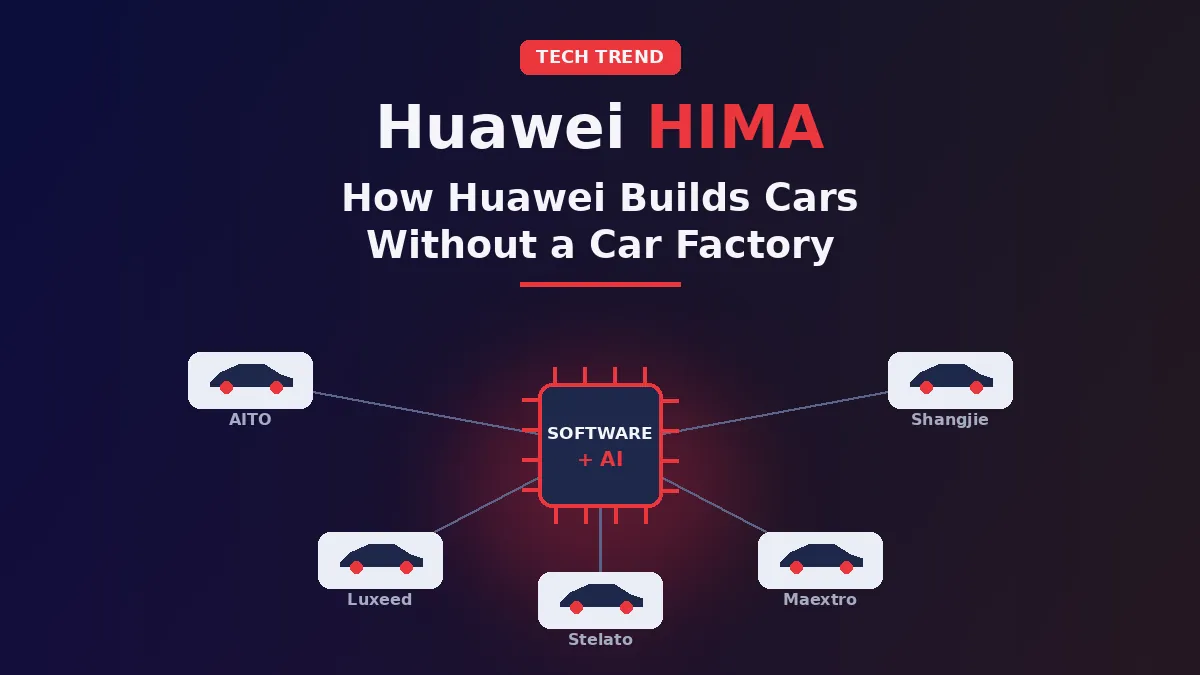
- Against other tech brands: Huawei works with partner carmakers, while Xiaomi builds its own cars in its own factory, which gives it more control over quality and design.
Challenges Xiaomi Still Faces
Xiaomi’s success has not come without problems. A fair look at the brand must include these issues:
- Safety concerns: a fatal SU7 crash in March 2025, while driver assistance was active, led to investigations and stricter rules in China. Xiaomi later issued a software update for more than 115,000 SU7 cars and set up a safety advisory committee in 2026.
- Quality complaints: some owners reported issues such as warped bumpers, and buyers of an optional performance package found that some air ducts were only decorative.
- Design criticism: critics say the SU7 looks too similar to Porsche models.
- Long waiting times: high demand led to waiting lists of many months for some versions.
Turning smartphone speed into car-level safety and reliability is now Xiaomi’s biggest test.
Is Xiaomi Going Global? Europe in 2027
Xiaomi has confirmed that Europe will be its first overseas car market, with sales planned to begin in 2027. Right-hand-drive versions and plans for markets like the UK and Australia have not been confirmed yet. Since Chinese brands are already taking a growing share of Europe’s EV market, Xiaomi’s entry could add more pressure on European and American carmakers.
Can You Buy a Xiaomi Car in Pakistan?
As of October 2026, Xiaomi has not officially launched its cars in Pakistan, and there is no official dealer or service network. Some private importers may bring cars from China, but buyers should be careful. Imported units may face problems with warranty, software updates, spare parts and charging compatibility. For now, Pakistani buyers who are interested in Xiaomi cars should wait for an official launch in the region or follow Xiaomi’s global expansion plans closely.
What Xiaomi’s Journey Means for the Future
The story of the Xiaomi SU7 and YU7 shows that the line between tech companies and car companies is disappearing. A car is no longer just an engine and four wheels. It is a connected device that runs software, uses AI and links to the rest of your digital life. Xiaomi understood this early and used its phone-making skills to build cars that feel familiar to millions of users.
Whether Xiaomi becomes a long-term global car brand will depend on safety, quality and its success outside China. But one thing is already clear: a phone brand has become a real car brand, and the rest of the auto industry is paying attention.
Frequently Asked Questions
When did Xiaomi start making cars?
Xiaomi announced its electric car business in 2021, and its first car, the SU7 sedan, went on sale in China in March 2024.
What is the difference between the Xiaomi SU7 and YU7?
The SU7 is a four-door sports sedan, while the YU7 is a larger SUV designed for families. The YU7 offers more space and higher seating, while the SU7 is lower and sportier.
What is the price of the Xiaomi SU7 and YU7?
In China, the SU7 started at about 215,900 yuan at launch, and the YU7 now starts at 233,500 yuan with the 2026 Standard Edition. Performance versions such as the SU7 Ultra and YU7 GT cost much more.
What is the range of the Xiaomi YU7?
The Xiaomi YU7 offers up to 835 km of range on China’s CLTC test cycle. Real-world highway range will be lower.
Is the Xiaomi YU7 better than the Tesla Model Y?
On paper, the YU7 offers more range, faster charging and a lower starting price in China. The Model Y still has a stronger global brand, a wider service network and a longer track record.
What is the Xiaomi YU7 GT?
The YU7 GT is the high-performance version of the YU7 SUV. It has around 990 horsepower, a top speed of 300 km/h, and set a Nürburgring lap record for production SUVs.
How many cars has Xiaomi sold?
Xiaomi passed 800,000 total electric car deliveries in September 2026, less than three years after its first car was delivered.
Will Xiaomi cars come to Europe?
Yes. Xiaomi plans to start selling its cars in Europe in 2027, which will be its first market outside China.
Is Xiaomi car available in Pakistan?
No. As of October 2026, Xiaomi cars are not officially sold in Pakistan. Only private imports may be possible, which come with warranty and service risks.
What is HyperOS in Xiaomi cars?
HyperOS is Xiaomi’s operating system that connects its phones, tablets, smart home devices and cars. It allows phone mirroring, smart home control from the car, and over-the-air updates.

2 Comments